

Burglary Repairs in Maidstone (Emergency Boarding Up After a Break‑In)
A burglary is bad enough without the added worry of an unsecured door or window. If you’ve come back to a forced lock, smashed glazing, or a door that won’t shut, you need the property made safe quickly—especially if you’re in a busy area like Maidstone town centre, near Maidstone East/West stations, or on routes such as the A229 and A20 where footfall is high.
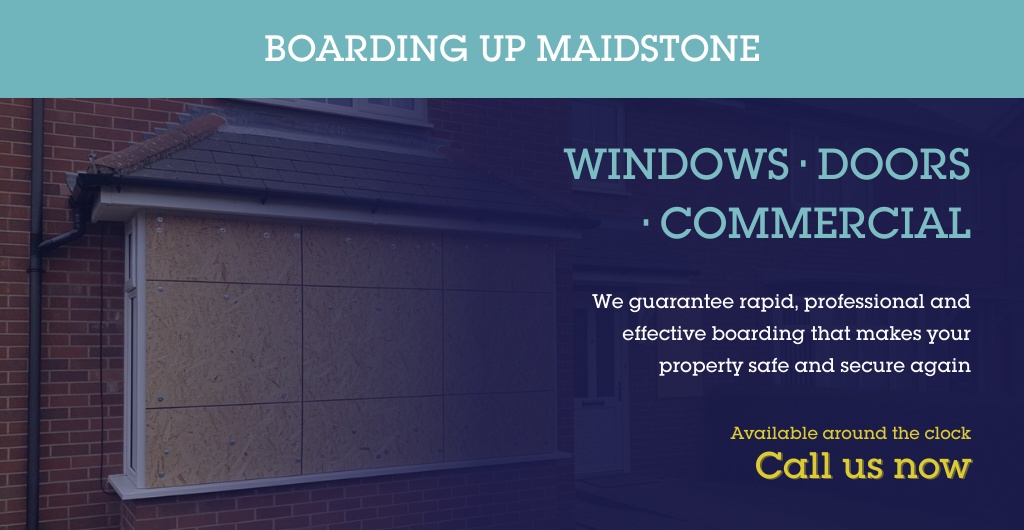
We provide burglary repairs in Maidstone focused on immediate security: emergency boarding up, door boarding, window boarding, and temporary steel doors across ME postcodes (ME1–ME20). We’re not locksmiths or glaziers—and we won’t pretend otherwise—but we do secure the building properly so you can breathe, deal with the police/insurer, and arrange permanent repairs.
Need urgent help after a break‑in? Call 01622 580 086 for immediate assistance.
When you typically need burglary repairs (and what “repairs” means here)
Most “burglary repairs” start with one thing: a weakness that needs closing immediately. The common triggers we attend across Maidstone and the wider ME area include:
- Kicked-in or prised doors (timber frames split, multipoint locks ripped out, hinges torn)
- Smashed or popped window units (often ground-floor, side access, or rear elevations)
- Patio doors lifted or forced
- Shopfront glazing attacked (especially where there’s a quick exit route or poor lighting)
- Outbuildings/garage side doors forced (which then allows access to the main property)
In burglary situations, “repair” often means making the property secure and weather-tight now, then leaving you with the right documentation for your insurer and for follow-on trades (glazier, locksmith, door contractor).
If you already know you need boarding, go straight to our emergency boarding up page.
First steps after a burglary (before we arrive)
If you’re reading this just after discovering a break-in, you’re not alone—and it’s normal to feel shaken. These steps help protect you and your claim:
- If the intruder might still be inside, call 999. Don’t enter.
- If it’s safe, avoid touching damaged entry points (doors, handles, window frames) so police can preserve evidence.
- Get a crime reference number and note the attending officer details if provided.
- Take photos/video of damage and the wider scene if safe to do so—especially the lock area, frame splits, and any glass shards.
- Call your insurer early. We’re not loss adjusters, but insurers usually want evidence of forced entry and proof the property was secured.
Then call us so we can secure the building properly.
Need help now? Call 01622 580 086 for immediate assistance.
How we secure a property after a break‑in (our burglary boarding process)
Every burglary scene is different, but our approach stays consistent: assess, secure, document.
1) Safety and damage assessment
We start by checking what’s actually compromised:
- Is the opening accessible from outside?
- Is the surrounding frame strong enough for non-destructive fixing?
- Are there sharp edges, loose glass, or unstable panels?
- Is the damage limited to a single opening or is there secondary access (rear window + side gate + shed)?
If the frame is too damaged to take fixings safely, we’ll explain options before proceeding. Sometimes the most secure approach is to span beyond the damaged section to sound material.
2) Choosing the right boarding method (plywood vs OSB vs steel)
For burglary boarding we typically use:
- 18mm exterior-grade plywood for high-risk or larger openings (strong, better resistance to attack)
- 12mm OSB for smaller or less exposed areas where appropriate
We size boards properly, plan fixings, and avoid “just screwing a sheet over it” approaches that can be levered off.
For doors that have been forced beyond practical boarding, we may recommend a temporary steel door—especially for empty properties or where the building must remain unattended.
Relevant services:
- window boarding in Maidstone
- door boarding up
- temporary steel doors and property securing (used for broader security solutions where appropriate)
3) Anti-tamper fixings and secure mounting
Burglars often return, particularly if they’ve already seen what’s inside. That’s why we focus on preventing outside removal:
- Anti-tamper fixings where suitable
- Fixing into solid substrates (sound frame/masonry) rather than shattered sections
- Internal bracing methods when needed, especially on damaged frames
If you’re a landlord or managing agent, we can also discuss medium-term options for repeat-risk locations.
4) Weatherproofing and making the property safe to occupy
Boarding after burglary isn’t only about security—broken windows and doors can expose a property to rain, cold air, and pests. We aim to:
- Close gaps and cover exposed openings
- Reduce draughts where possible
- Leave the area safe (e.g., glass cleared from immediate access routes where feasible)
We’ll be clear about limitations: boarding secures an opening, but it’s not a substitute for new glazing/frames or structural repairs.
5) Documentation for insurers and property records
Where required, we provide practical evidence such as:
- Time-stamped photos of damage and completed works
- Itemised invoices and a clear description of what was done
- Notes on the method/materials used (useful for claims and follow-on contractors)
For more on what insurers typically ask for, see our insurance claims guidance.
Common burglary damage we see in Maidstone properties
Maidstone has a real mix of building types—Victorian terraces, post-war estates, newer developments, and rural homes on the edges towards villages in ME17–ME18. That variety affects how we secure openings.
Victorian and Edwardian terraces
Older terraces often have timber frames and older door furniture. Forced entry can split frames rather than just damage locks. We may need to mount boards to sound structural points rather than compromised trim.
1930s–post-war family homes and maisonettes
These properties often have larger front windows and side access routes. After a smashed window, we’ll secure the opening to reduce repeat entry risk—especially where a quiet side path offers cover.
Flats and town-centre buildings
In and around Maidstone town centre, access can be tight (shared entrances, rear service alleys, managed blocks). We’ll work with building management where possible and keep disruption minimal while still securing the entry point.
Shops, offices, and mixed-use buildings
For commercial properties, a burglary is often a shopfront or rear service door issue. Boarding needs to be robust and safe for a public-facing environment. If you need commercial-specific help, see shopfront boarding and commercial property boarding up.
A realistic example: securing a forced door after a break‑in
A typical callout we see is a forced entry through a rear door on a residential street with easy access to the garden. The lock side is ripped out and the door won’t close, leaving the property exposed overnight.
In that situation we would:
- Inspect the frame and hinges for structural integrity
- Decide whether the door can be temporarily re-seated or whether it needs door boarding
- Fit boarding with fixings that can’t be removed from outside
- Photograph the damage and the finished security for the insurer
- Advise on next steps (locksmith/glazier) without trying to upsell unnecessary work
If a property is going to be empty afterwards—common after a serious burglary—we’ll discuss longer-term security options for voids, including vacant property boarding.
Burglary boarding vs locksmithing vs glazing (what we do and don’t do)
It helps to be clear about roles, especially when you’re stressed:
- We secure openings: boarding, temporary door solutions, security measures to prevent re-entry.
- We don’t replace locks or cut keys (that’s a locksmith’s job).
- We don’t fit new glazing or window units (that’s a glazier/window contractor).
However, our work often comes first—because insurers and police usually expect you to take reasonable steps to secure the property immediately.
If you’re unsure what you need, call and describe the damage. We’ll tell you honestly what we can do and what needs another trade.
FAQs about burglary repairs and boarding up in Maidstone
Can you secure my home tonight after a break-in?
Yes—if there’s an immediate security risk, you want emergency boarding up so the property isn’t left exposed overnight. We can’t promise a fixed arrival time because conditions vary, but urgent calls are prioritised.
Is burglary boarding covered by insurance?
Often it can be, depending on your policy and circumstances. We’re not loss adjusters, but we provide the documentation insurers typically ask for. See insurance claims help for practical guidance.
What’s the difference between window boarding and door boarding?
Window boarding focuses on securing broken or vulnerable glazing and frames; door boarding deals with forced entry points and damaged door sets. You can read more about each service here: window boarding in Maidstone and door boarding up.
Do you help landlords and letting agents after a burglary?
Yes. We regularly secure rental properties between tenants or immediately after an incident. If the property will be empty, it may be worth looking at vacant property boarding to reduce repeat risk.
I’m in an ME postcode outside Maidstone town—do you cover me?
Yes. We cover Maidstone and the wider ME area (ME1–ME20). If you’re unsure, check areas we cover or call us and we’ll confirm.
What to do next (quick checklist)
- Keep your crime reference number
- Take photos (if safe) before anything is moved
- Call your insurer to log the incident
- Arrange immediate security so the property isn’t targeted again
If you need urgent help, we’re ready to secure doors, windows, shopfronts, and other vulnerable openings.
Need help now? Call 01622 580 086 for immediate assistance.
Prefer email? [email protected]
